Descripción
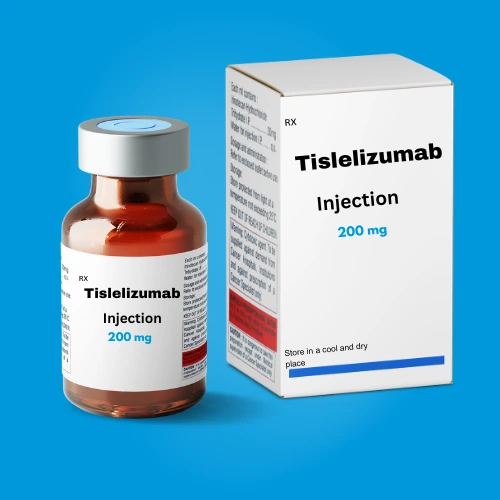
Tislelizumab Injection is a PD-1 inhibitor and humanised monoclonal antibody used in specific cancer-treatment regimens. It works by blocking the PD-1 pathway, helping restore immune-system activity against cancer cells. Tislelizumab is administered by intravenous infusion, with the current EU product information specifying a 100 mg/10 mL concentrate for solution for infusion. Availability, presentation and approved uses may vary by market and product.
What Is Tislelizumab?
Tislelizumab is a humanised monoclonal antibody that targets programmed cell death protein 1 (PD-1), an immune checkpoint receptor found on immune cells. By binding to PD-1, Tislelizumab helps prevent interactions with its ligands PD-L1 and PD-L2. This can reduce the immune-suppressive signalling that allows cancer cells to avoid immune-system activity.
Tislelizumab is used as part of specific oncology treatment regimens and is administered through intravenous infusion under the supervision of qualified healthcare professionals.
What Is Tislelizumab Used For?
Tislelizumab is used in specific cancer treatment settings. The appropriate indication depends on the cancer type, disease stage, biomarker status, previous treatment and the applicable product label.
Tislelizumab for Non-Small Cell Lung Cancer
Tislelizumab may be used in specified treatment regimens for adults with certain types and stages of non-small cell lung cancer (NSCLC).
Tislelizumab for Small Cell Lung Cancer
Tislelizumab is also authorised in specific treatment settings for adults with extensive-stage small cell lung cancer, according to applicable product information.
Tislelizumab for Gastric and Gastroesophageal Junction Cancer
In selected patients with unresectable, locally advanced or metastatic gastric or gastroesophageal junction adenocarcinoma, Tislelizumab may be used in combination with chemotherapy according to the applicable indication.
Tislelizumab for Oesophageal Squamous Cell Carcinoma
Tislelizumab is used in certain treatment settings for advanced or metastatic oesophageal squamous cell carcinoma.
Tislelizumab for Nasopharyngeal Carcinoma
Tislelizumab may also be used for specific treatment settings involving recurrent, locally advanced or metastatic nasopharyngeal carcinoma.
Note: Approved indications and treatment combinations may vary by country and regulatory authority. Treatment should always follow the current prescribing information applicable to the patient’s market.
How Does Tislelizumab Work?
Tislelizumab works by targeting the PD-1 immune checkpoint pathway.
Cancer cells can use PD-L1 and PD-L2 signalling to reduce the activity of immune cells. Tislelizumab binds to PD-1 and blocks its interaction with PD-L1 and PD-L2. This can help restore immune-cell activity and support the body’s immune response against tumour cells.
Tislelizumab is therefore classified as a PD-1 inhibitor and belongs to the broader group of cancer immunotherapies.
Tislelizumab Injection Administration
Tislelizumab is administered as an intravenous infusion by qualified healthcare professionals.
The dosage and treatment schedule depend on factors such as:
- The specific cancer being treated
- Treatment regimen
- Previous therapy
- Patient-specific factors
- Applicable product information
Tislelizumab may be administered alone or in combination with other anticancer medicines where specifically indicated.
Patients should not determine or change the dose or treatment schedule themselves.
Tislelizumab Storage and Handling
| Parameter |
Details |
| Storage Temperature |
2°C to 8°C |
| Freezing |
Do not freeze |
| Light Protection |
Keep the vial in the outer carton |
| Container |
Original vial |
| Diluted Solution |
Handle according to the applicable product information |
| Transportation |
Maintain required temperature-controlled conditions where applicable |
| Handling |
Follow appropriate aseptic preparation and administration procedures |
| Before Administration |
Check the current product information for preparation and in-use requirements |
| Important |
Storage and handling requirements may vary by product presentation and destination market |
Note: Always follow the current approved product information for the specific Tislelizumab product being supplied.
Dosage & Side Effects
Tislelizumab Side Effects and Safety
Like other immune checkpoint inhibitors, Tislelizumab can cause adverse reactions. Some reactions may occur because increased immune activity affects healthy tissues.
Potential adverse reactions can include:
- Fatigue
- Nausea
- Skin reactions
- Reduced appetite
- Infusion-related reactions
- Changes in liver function
- Changes in thyroid function
- Other immune-mediated adverse reactions
More serious immune-related reactions can affect organs such as the lungs, liver, intestines, kidneys or endocrine glands.
Patients receiving Tislelizumab should be monitored by their healthcare team and should report new or worsening symptoms promptly.
Tislelizumab Storage and Handling
Tislelizumab should be stored and handled according to the approved product information for the specific presentation being supplied.
For pharmaceutical procurement, storage and transportation requirements should be confirmed before shipment, particularly where temperature-controlled handling is required.
Include the following information on the actual product page only after verification from the applicable label:
- Storage temperature
- Light protection
- Shelf life
- After-opening/in-use requirements
- Dilution requirements
- Transportation conditions
This prevents the website from publishing incorrect product-specific storage information.
Serious or Immune-Mediated Reactions
Tislelizumab can cause immune-mediated adverse reactions because it affects the PD-1 immune checkpoint pathway. These reactions can involve different organs and may require prompt medical assessment and appropriate treatment.
Potential immune-mediated reactions may affect the:
- Lungs — pneumonitis
- Liver — hepatitis and changes in liver function
- Intestines — colitis and severe diarrhoea
- Kidneys — nephritis and changes in kidney function
- Endocrine system — thyroid, adrenal or other hormone-related disorders
- Skin — immune-related skin reactions
Patients receiving Tislelizumab should be monitored for new or worsening symptoms during treatment. Any suspected immune-mediated reaction should be evaluated by the treating healthcare professional.
Important: Do not present this section as a self-diagnosis guide. The actual management of immune-mediated reactions should follow the applicable prescribing information and medical supervision.
Warning and Precautions
Tislelizumab Warnings
Tislelizumab treatment can cause immune-mediated adverse reactions because it affects the PD-1 immune checkpoint pathway. Patients should be monitored during treatment for signs and symptoms that may indicate an immune-related reaction.
Tislelizumab should be administered under the supervision of a healthcare professional experienced in cancer treatment. Appropriate clinical evaluation and monitoring should be carried out according to the applicable prescribing information.
Immune-Mediated Adverse Reactions
Because Tislelizumab modifies immune-system activity, immune-mediated reactions can affect different organs and body systems.
Healthcare professionals should monitor patients for symptoms associated with conditions such as:
- Pneumonitis — new or worsening cough, breathing difficulty or other respiratory symptoms.
- Colitis — persistent diarrhoea, abdominal pain or changes in bowel habits.
- Hepatitis — abnormal liver-function tests or symptoms suggesting liver inflammation.
- Nephritis — changes in kidney function or other signs of renal inflammation.
- Endocrine disorders — changes affecting the thyroid, adrenal glands or other endocrine functions.
- Skin reactions — new or worsening rash and other immune-related skin conditions.
Suspected immune-mediated adverse reactions should be assessed and managed by the treating healthcare professional according to the applicable product information.
Infusion-Related Reactions
Tislelizumab is administered by intravenous infusion and may cause infusion-related reactions.
Patients should be monitored during and after administration as appropriate. Symptoms such as chills, fever, flushing, dizziness, breathing difficulty or other acute reactions should be reported immediately to the healthcare professional administering the treatment.
The infusion should be managed according to the applicable prescribing information if a clinically significant reaction occurs.
Liver, Kidney and Endocrine Monitoring
Tislelizumab treatment may be associated with changes in liver, kidney or endocrine function.
Depending on the treatment regimen and clinical circumstances, healthcare professionals may monitor:
- Liver function
- Kidney function
- Thyroid function
- Other relevant endocrine parameters
Abnormal results may require further clinical assessment and appropriate management.
Pregnancy and Breastfeeding
Patients who are pregnant, planning pregnancy or breastfeeding should discuss Tislelizumab treatment with their healthcare professional before treatment begins.
The potential risks and benefits of treatment should be assessed according to the applicable prescribing information.
Use With Other Cancer Medicines
Tislelizumab may be used alone or in combination with other anticancer medicines in specific treatment regimens.
The safety, dosage and treatment schedule depend on the specific indication and combination being used. Patients should follow the treatment plan prescribed by their oncology team and should not change or stop treatment without medical advice.
Important Precautions
- Tislelizumab should be used only under qualified medical supervision.
- Patients should inform their healthcare professional about existing medical conditions and medicines they are taking.
- New or worsening symptoms during treatment should be reported promptly.
- Immune-mediated adverse reactions may require medical evaluation and treatment.
- Treatment should follow the current prescribing information applicable to the patient’s market.
- Patients should not self-administer Tislelizumab or change the prescribed treatment schedule.
Note: Tislelizumab is a prescription medicine. Its warnings, precautions and treatment requirements should be assessed by a qualified healthcare professional based on the applicable product information.